

SSPX Game Theory
Against Undue Triumphalism On Every Side

Underappreciated amid discourse on the planned consecrations of new bishops by the Society of St. Pius X, is how it’s more complicated than simply a negotiation between Cardinal Fernandez/the Vatican on one hand and the leaders of the SSPX on the other. The space of options, rather, even on matters involving souls, is heavily constrained by the other members of each one’s own side, the cumulative pressure pushing toward rupture and against any reconciliation, even as reconciliation is actually in the best long-term interest, both politically and spiritually, of all parties involved.

No matter how the negotiations and dialogue play out, no matter how conciliatory, if the SSPX makes a deal with the Vatican to get more bishops to continue its work, it will split, with conservatives within the Society seeing the movement as compromised and leaving, as already happened a decade ago with the founding of the SSPX-Resistance. The SSPX leadership, knowing this, knows they can’t just “make a deal” unless the Vatican gives them such free range that they can claim a total narrative victory.
If anyone in the Vatican were to support making a deal with the SSPX, meanwhile, it would be seen—rightly—by modernist hardliners who depend on the managerial infiltration network, the Synodal/Modernist Inc. alliance with secular power, as a threat to their power. Mainstreaming traditionalism rather than ghettoizing it with the SSPX’s “are they in communion, aren’t they” cloud of shame would instantly crash the institutional power of managerialism by allowing Catholics to fully opt out from the coopted managerial system without facing any moral qualms about their status within the Church. The liberals in the Vatican—and anyone wanting to make a deal to regularize the SSPX both—know this, making any bishop, Cardinal, or curial official who proposes such a compromise a target for the managerial apparatus to put its full weight into crushing them.
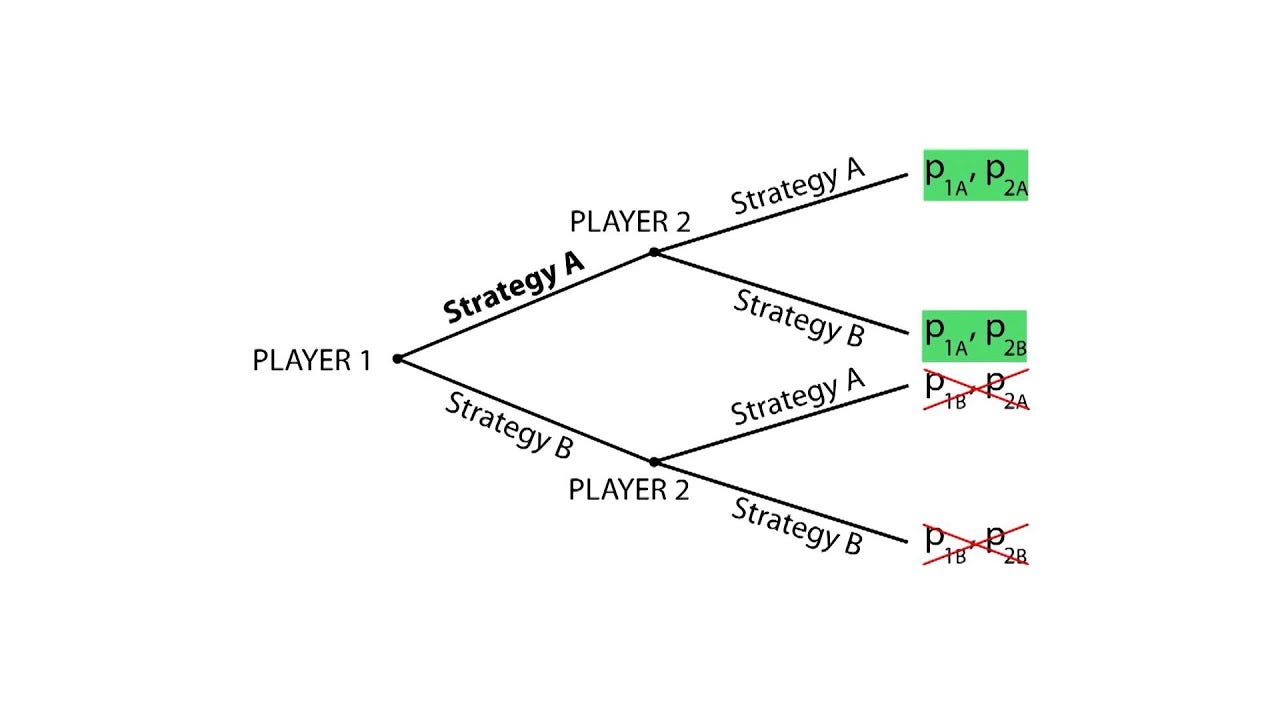
In other words, everyone’s afraid of the hardliners on their own side and reconciliation, at least from a game theory point of view, is next to impossible as with the parallel situation of 1988, where Pope John Paul II and then Cardinal Ratzinger were urged against reconciliation with Lefebvre by bishops and Cardinals like Cardinal Villot, possible instigator and leader of the entire anti-Lefebvre crusade throughout the 1970s and 80s, who felt particularly threatened by the Society’s growth and flourishing compared to general post Vatican II decline. Meanwhile, Archbishop Lefebvre felt pressured most of all toward going ahead with his 1988 Consecrations of Bishops at Econe to continue the Society by his own seminarians, who told him they feared not being ordained should Lefebvre die before “Operation Survival” could perpetuate the Society.
The SSPX Scenarios
In 1988, as now, there are four primary options for what could ensue, and then, as now, everyone’s choices are constrained both by the actions of the other side as well as other members of each one’s own side:
Inaction from the SSPX means no consecrations and therefore no Vatican response, meaning the relatively open, yet still murky relationship between the SSPX and Rome continues. However, this can’t last, as the SSPX can’t, at least in its current form, can’t last without bishops, and failure to act on their part would lead to many of its current members and priests leaving. Fr. Pagliarani and the SSPX bishops obviously know this, so there’s no way they will do nothing, or, similaily engage in the endless dialogue and synodal process of encounter that they’ve apparently been offered by Cardinal Fernandez, one which appears to be merely a Vatican play for time.
The SSPX accepts a deal from the Vatican, like that offered by Ratzinger in 1988, taken by priests in 1988 who split from the SSPX to form the FSSP, perhaps gaining Vatican approval for bishops by becoming a “Personal Prelature.” While this would solve the long-term problem of their canonical status and future in the Church, it would, unless it was a total victory for the SSPX’s negotiating positions regarding Vatican II and the Novus Ordo, as capitulation, and would also lead to many of their members leaving and splitting off from fear that the Society, under the thumb of the managerial apparaticharks, would quickly be muffled, or eliminated entirely as other traditionally minded religious orders have been in the last decade. The SSPX also won’t take this route. While some in the Vatican might be willing to offer it, opponents of tradition wouldn’t want their synodality and managerial structures threatened by a successful SSPX that’s far more able to wield an impact on Catholicism as a whole than in the current status quo, so these liberals also won’t be interested in any reconciliation that isn’t a complete capituatlion by the SSPX.
The SSPX consecrates bishops without papal approval, and the Vatican does nothing. This would be, from a certain sense, the most self-consistent response for many of those involved, as it would match the silence implying consent in the case of far more sketchy actions by the Chinese Patriotic Catholic Association and the German Synodal Way. However, the hardliners of progressivism in the Vatican would see the SSPX gaining another few decades of runway to survive and thrive, and not suffering another round of excommunications for it as a capitulation by the Vatican toward traditionalists and a threat to their power. So inaction won’t happen, either, leaving us only with the fourth option, seemingly inevitable, a repeat of 1988.
The SSPX consecrates bishops without papal approval and is excommunicated again. This option, most likely the SSPX and the Vatican negotiating until the SSPX decides that the negotiations are merely a stalling tactic, and they then go ahead with consecrating more bishops before being excommunicated again, is the only option really on the table for SSPX leadership, as anything else would be seen as capitulation or inaction by their own members. They have to act. Meanwhile, anything less than excommunication would be seen as inaction and capitulation by the progressives in the Church most threatened by the SSPX’s growth.
The fourth option seems the most likely, reconciliation being nearly impossible, even on matters involving souls, due to the peer (mimetic) pressures by people on one’s own side, creating extreme pressure against compromise.
Would Excommunications Backfire?
However, if the Vatican excommunicates them again, it could easily backfire, invigorating traditionalist resistance. The SSPX is far more mainstream than they were 40 years ago. It has more allies, recognition, and sympathy within the Church, including among the hierarchy. Any new action against them would sharpen battle lines within the Church, lead to more people (or even priests and bishops) jumping to their side, and increase clout for the Society, especially if, as TLM_Ryan, has argued, Pope Benedict XVI painted the Vatican into a corner here by lifting the 1988 excommunications.
The SSPX can now logically argue that, since the excommunications over the 1988 Econe consecrations were later lifted, they were unjust in the first place, and any repeated excommunications would also be unjust and would be overturned by a later pontiff. The Society continues intact then, but the gap between it and the rest of the Church grows until some future day where pure demographics, as TLM_Ryan argues, forces the Vatican to reconcile—and ultimately—to roll back the managerialist infiltration and networks that have perpetuated the Catholic Revolution since Vatican II.
False Triumphalism?
This is a vision that has captivated many commentators, yes, over these past few weeks, who’ve urged the SSPX to “cut ties with modernist Rome” entirely and just sit out the crisis, waiting for the rest of the Church to come back to its senses.


But does this outcome leave the Society, even if it gains in the short term, and the Church as a whole, in a better spot? Triumphalists for the Society believe so, talking about the SSPX having a Divine and a human element like the Church itself, and, therefore, having a Divinely ordained mission, as its founder, Archbishop Lefebvre, in some way believed, to be the continuity of the Church through the present crises of faith.
This is the model favored by many traditionalists of the SSPX and similar groups, like St. Athanasius during the Arian Crisis of the 4th century, having to endure persecution even from within the Church in order to be faithful to God, even to the point of actions that would in normal times appear to be rebellious and schismatic.
Opponents of the Society, meanwhile, like to compare the current situation to the 16th century, painting the SSPX, and, more emphatically, sedevacantists, as neo-Protestants, rebels against the rightful authority of the Church.
I must admit I’m personally conflicted here. A clean break or a larger opening of the divide between Rome and the SSPX, no matter how justified, will pain the hearts and consciences, and risk the souls of people on all sides and is a wound on the body of the Church as a whole, Christ’s Body. It’s a dangerous game to be in SSPX Superior General Fr. Pagliarani’s shoes, or Cardinal Fernandez’s, or really any place where you’re forced to make decisions affecting other souls. A step like performing a new round of consecrating bishops, at the very least, shouldn’t be taken light heartedly. But, on the other hand, it’s hard to argue, given how dead set many bishops, priests, and lay administrators with power over parishes are on banalizing the Faith and holding the sacraments hostage for you to give a pinch of incense to secularism and modernism, that they’re not responding to a true state of necessity.
No matter what the actual de jure situation is, or soon will be, between the SSPX and Rome, we’re all still in an irregular situation that is less than optimal and needs to be solved. Even if there isn’t a juridical schism, there’s still a de facto schism in the hearts and actions, which the SSPX going forward with consecrating bishops will only exacerbate.

While modernists in the Church have a schism against tradition and the Faith in their hearts, de facto separating oneself from lawful, yet abusive authority. no matter how justified, it can not be a long-term solution, and failing to work towards solving it will only perpetuate the crisis in the Church by ghettoizing traditionalists, leaving more members of the Church to suffer prey to wolves, and perhaps, leading some, even if well motivated at the beginning, to, like the Protestants, never fully reconcile themselves to the Church, even when the crisis ultimately gets resolved.
The Long View of History on the SSPX
The examples of St. Athanasius and of the Protestant Reformation preferred by people on both sides of the debate provide instructive warnings, yes, but an even more helpful one, though none are perfect, might be the 40-year-long Great Western Schism from 1378 to 1417. The Schism, one of the indirect causes of the Protestant Revolt, was inadvertently caused by the 1378 conclave’s attempt to solve a previous crisis, the Avignon Papacy, or the subversion of the papacy by the secular power of the French Capetian dynasty. For nearly forty years, following a disputed conclave and political machinations between all the countries of Europe, Christendom was split down the middle for a generation between dual papal claimants, one residing in Rome and one in Avignon, with mutual excommunications, strife, and violence until a solution was finally found in 1417.
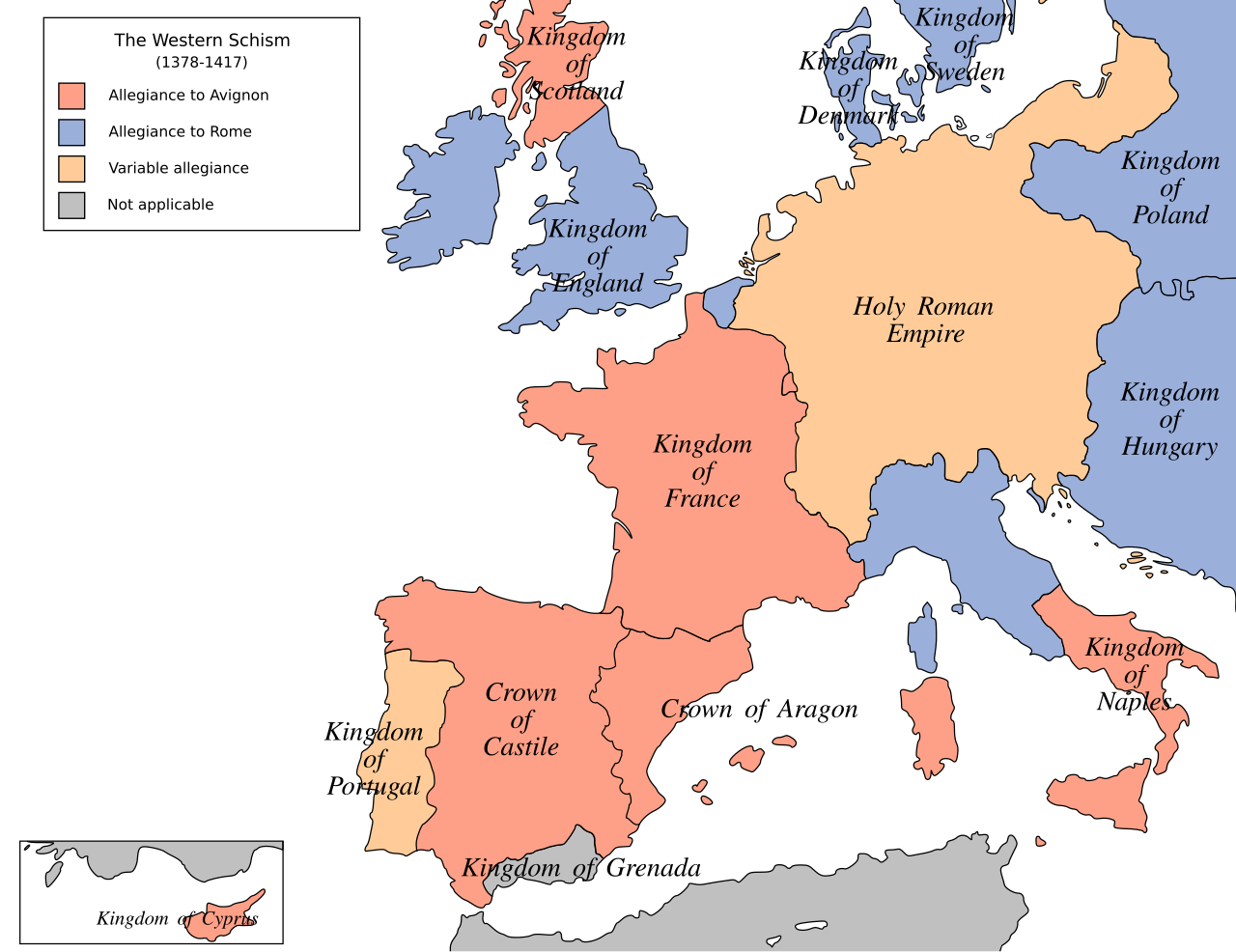
Two now canonized saints, St. Catherine of Sienna and St. Vincent Ferrer, took opposing sides during the crisis, which was only ultimately resolved by the Council of Florence forcing both sides to compromise.
The SSPX situation today, and many of the broader aspects of the current crisis caused by an ongoing Second Avignon Captivity, but this time of secular managerialism and its method and modes into the Church, is, I believe, closer to the Great Western Schism in that history will find saints and sinners on both sides of the divide and that the crisis continues, not just because one side is attached to error and the other perfectly in possession of the truth. Rather, due to the mimetic pressure induced by the radicals on each side, the progressives who hate tradition on one side and the sedevacantists on the other,1 the moderates can’t reach a deal, as they will lose all legitimacy for their current power. Both sides, further, are tempted, unconsciously, to keep the status quo, as full resolution of the crisis in the Church would have to lead to major changes in the Vatican, yes, but also a far more constrained role for the Society just as the resolution of the Great Western Schism was only through the election of a new pope and the resignation of the dueling claimants.
There is a crisis of faith and large moral corruption within the Church, as in St. Athanasius’s day and at the time of the Protestant separation, yes. In fact, it’s probably worse today. But resolution, more akin to the Great Western Schism, can only come when both sides are in a position where they can afford to cede ground.
This means encouraging more people on both sides to recognize that it’s possible for well-meaning Catholics to disagree about the proper response. More emphatically, however, it means persuading people that reconciliation needs to happen, and the sooner the better, as division and dissent, as much as the heresies widespread within the Church today, are also a cause of scandal and the loss of souls. In the triumphalist mode that many are in right now, SSPX-haters are almost gleeful in hopes that the Society will be excommunicated, while some triumphalists on the other side are gleeful about the same thing but for opposite reasons. This is the same social mimetic process that leads to the beginnings and escalations of wars, and which often makes peace impossible, where men seeking status from their own team take hawkish stances to gain clout while reconciliation is made to seem as treason.
But it’s worse here since it’s not just lives, but souls that are at stake.
Yes, as TLM_Ryan argues, demographic trends look favorable in the long run for reconciliation being forced upon everyone. Yes, it is also good that talks between the SSPX and the Vatican remain ongoing. But given the likely outcome of events, no one should be triumphalist.

Salvation (and the Church) Isn’t A Game
It may often be played like one, with all the political machinations and mimetic effects involved, but neither salvation nor the Church is a game.
The SSPX, while I sympathize with the good work they’ve done to preserve what would otherwise have been lost in the Catholic Revolution, is not going to solve the crisis alone. They’ve avoided the managerial and modernist viruses that have grown up within much of the Church by operating quasi-independently, but doing so does not solve the crisis. That can only come from purging the managerialist infiltration of Catholicism from the highest realms of the hierarchy and from every parish. But they, nor any other traditionalist group, are not in and of themselves the entirety of the Church. They are not indefectible; the Church as a whole is, and their current situation and actions, while likely to be vindicated and lead to many a future saint on the calendar, are not guaranteed to be safe. Just because there’s a lion loose within the city doesn’t mean that the surrounding jungle is any safer.


We should look at the likely continuation of division within the Church as tragic and as a bad thing. We’re still in the crisis that began in the 1960s, with many of the most faithful Catholics being filtered out (or leaving) the Church first, and I don’t want to think about having to make the hard choices that could ensue should the battle lines be drawn even more sharply. As Piers the Plowman (Darrick Taylor) recently wrote on Crisis Magazine, the only reason we’re having this debate is that the crisis is already confusing and messy enough as it is:
The problem is that the Catholic Church has been attempting to modernize itself over the past six decades plus in order to accommodate itself to modern society; and one result of this has been massive confusion about what constitutes the Church. In practice, the Church has made so many alterations to virtually every aspect of its life that the average person has no idea any more what it means to be in or outside communion with the Church. If the SSPX vanished tomorrow, this problem would still exist; and it would still be just as dire and far from resolution as it is today. The SSPX is a symptom of this problem, not its cause.2
Rather than being triumphalist about continued division, no matter what we think about the Society’s status, or how bad the crisis is in Rome, we ought to take to heart the famed Solzhenitsyn quote that “the line between good and evil passes through every human heart” applies just as much to the debates within the Church.
Are we contributing to extending the crisis, or are we pushing toward its solution? Are we motivated by the salvation of souls, or by the mere political motivation of saying the popular thing for our own side that will give us more clout?
To the false parody of charity that is the ecumenism going on in the hierarchy today, of mingling with non-Catholic religions to promote “dialogue” and “understanding” as well as to our divisions, the true answer is Catholic ecumenism, ecumenism to other Catholics being grounded in the faith and the liturgy of all ages first and foremost, before we identify ourselves with any faction of the Church thereof.
The Catholic faith is not Russian Roulette. It is not something that should be defended out of fear, pride, anger, or revenge. It is not something so hidden as merely to exist in one “resistance to a resistance to a resistance” group. Yes, it is infiltrated and under attack, but neither is it so hidden or intellectualized as to be something that only experts who have read every single theological treatise can discover or truly be a faithful part of.


In the end, charity, true charity, the self-sacrificing even unto death charity of the Savior, is the only thing that matters.
Salvation isn’t a game.
St. Vincent Ferrer and St. Catherine of Sienna, pray for us!
Sedevacantism is a red herring; the real debate that, practically speaking, splits “regular Catholics” from sedevacantists is whether they consider so-called “una cum Masses”, those celebrated valid versus intrinsically displeasing to God.
The example of the Great Western Schism seems at least to make this last question, the thing that makes sedevacantists paranoid, and leave the “institutional Church” entirely moot, or at very least far more open to nuance.
Even if sedevacantism were true, one wouldn’t necessarily have to leave behind one’s priests and the “institutional Church” because merely communing with them doesn’t make one to be communing with the “anti-Pope” because by their own definition, that anti-Pope is out of the Church, but just being followed by the hierarchy even though he holds no office.
Sedevacantists also often believe the entire rest of the institutional Church has become a counterfeit, but this is definitely an additional, and far more weighty, assumption.
At its very base, sedevacantism is an opinion, and can remain as such.
Darrick Taylor, “The SSPX is Not the Problem,” Crisis Magazine. https://crisismagazine.com/opinion/the-sspx-is-not-the-problem
Such a well written article. More Catholics need to understand the situation in the Church. You have rightly said reconciliation is needed and true Christian charity is the way. People have been throwing around the word unity, but charity, a sincere truthful charity is the way forward, to solve this crisis. May God help us. It’s becoming unbearable to watch the hypocrisy from Rome.
Thank you for the article, James! I think that the doctrinal issues with the Society are more of an element here. The errors of the Society prevent them from being in full communion with the Church, and it is impossible for them to reconcile with the Church without rejecting their rejection of the faith, e.g. their rejection of papal supremacy in matters of discipline, their rejection of religious liberty. Moreover, since the Church is "the Sacrament of Salvation," the life in Christ is communicated through the Church as a community, not just through some set of propositions which are only defined when some group like the SSPX starts to prey on the faithful. So, it follows that communion with the universal Church is the path to salvation and happiness. To claim that one's own efforts, whether intellectual, juridical, or liturgical, can achieve salvation over and against the graced life of God in the Church, is stupid, prideful, and sacrilegious.
It doesn't matter how many young people like to attend your mass, if your mass is leading them away from Christ. Young people are not notorious for their discerning spiritual judgement anyhow.
TLDR: The curse of Almighty God will not be far away from those who set themselves up in prideful disobedience against the Holy See of Rome.